E-mail:
exexportmachinery@126.com
Tel:
+86-15256547590
 English
 français
 русский
 Español
 العربية
 Pilipino
 Polska
 shqiptar
 hrvatski
 საქართველო
 Lietuva

An offset printing machine is one of the most important pieces of equipment in the global printing industry. From commercial printing and publishing to packaging and labeling, offset printing technology remains the preferred solution for businesses that demand high print quality, stable performance, and cost efficiency.
For printing business owners, factory managers, and buyers, understanding how an Offset Printing Machine works is not just technical knowledge—it directly affects machine selection, production efficiency, print quality, and long-term return on investment.
The working principle of an Offset Printing Machine is based on a simple physical and chemical rule: oil and water repel each other.
Unlike direct printing methods, an Offset Printing Machine does not transfer ink directly from the printing plate to the paper. Instead, it uses an indirect printing process, which is why it is called “offset” printing.
The core principle includes:
Image areas on the plate attract oil-based ink
Non-image areas attract water (dampening solution)
Inked image is transferred from the plate to a rubber blanket
The rubber blanket transfers the image onto paper
This indirect method allows the Offset Printing Machine to produce sharper images, consistent colors, and high-quality results on various paper types.
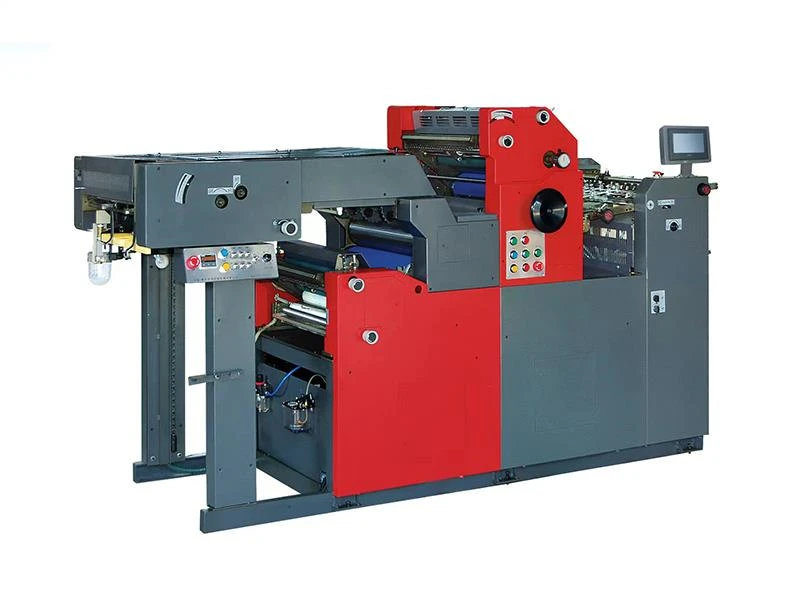
To fully understand how an Offset Printing Machine works, it is important to follow the complete printing cycle.
The aluminum printing plate is mounted onto the plate cylinder of the Offset Printing Machine. The plate carries the image to be printed.
The dampening system applies a thin and controlled layer of water to the plate. This prevents ink from sticking to non-image areas.
Ink rollers evenly distribute ink across the plate. Ink adheres only to the image areas due to the oil-and-water repelling principle.
The inked image is transferred from the plate cylinder to the rubber blanket cylinder. This step protects the plate and improves print quality.
Paper passes between the rubber blanket cylinder and the impression cylinder. Pressure transfers the image cleanly onto the paper.
The printed sheets are delivered to the output stack for drying or further processing.
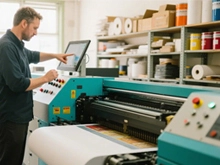
Modern Offset Printing Machines from offset printing machine manufacturers like EX.EXPORT are designed to automate and optimize every step for stable, high-speed production.
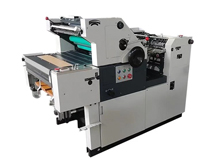
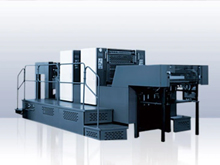
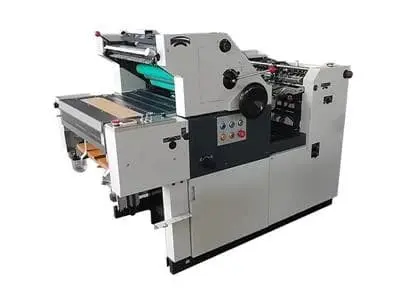
An Offset Printing Machine diagram helps operators understand machine structure and workflow. While designs vary, most Offset Printing Machines include these key components:
Feeder unit – feeds paper into the machine
Plate cylinder – holds the printing plate
Rubber blanket cylinder – transfers ink to paper
Impression cylinder – applies printing pressure
Inking system – ensures even ink distribution
Dampening system – controls water balance
Delivery unit – stacks printed sheets
By understanding the Offset Printing Machine diagram, operators can:
Quickly locate mechanical issues
Improve setup accuracy
Reduce print defects
Perform maintenance more efficiently
These three components are the heart of every Offset Printing Machine.
Holds the image
Made from aluminum for durability
Sensitive to ink and water balance
Transfers ink from plate to paper
Flexible surface ensures uniform ink coverage
Extends plate life and improves print quality
Applies pressure to transfer the image
Ensures accurate registration and sharp detail
High-quality Offset Printing Machines use precision-engineered cylinders to maintain consistent pressure even at high printing speeds.
Uses individual sheets of paper
Ideal for packaging, books, brochures, and labels
Flexible paper sizes and thickness
Widely used in small and medium printing factories
Uses continuous paper rolls
Designed for large-volume, high-speed printing
Commonly used for newspapers and magazines
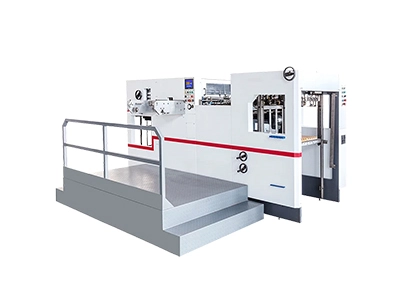
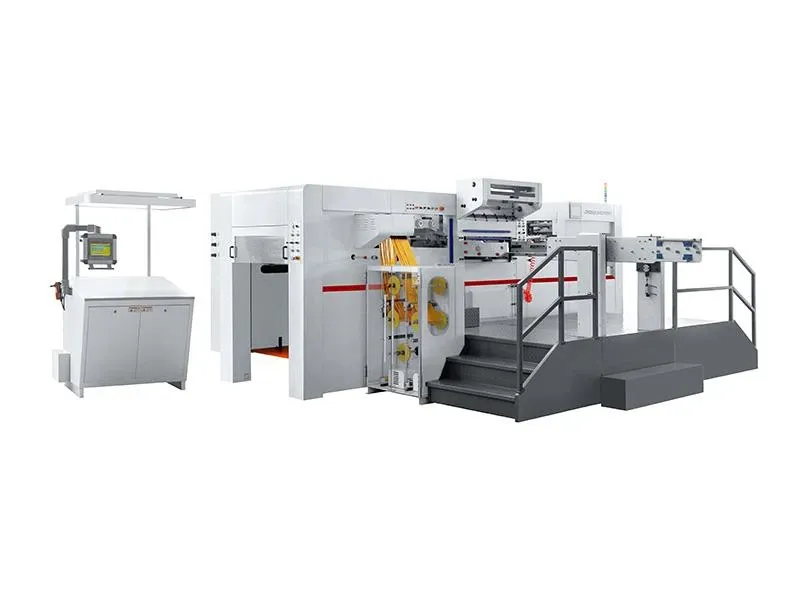
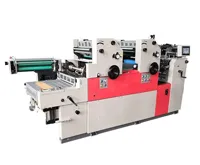
EX.EXPORT focuses on sheet-fed Offset Printing Machines, offering single-color, two-color, double-sided, and multi-color configurations for different production needs.
Even a high-quality Offset Printing Machine can produce defects if the process is not properly controlled.
Ink smearing
Uneven color density
Ghosting
Misregistration
Paper wrinkling
Correct ink-water balance prevents smudging
Proper cylinder pressure improves image sharpness
Stable paper feeding ensures accurate alignment
Regular calibration reduces waste and downtime
Understanding how an Offset Printing Machine works allows operators to quickly identify and correct these issues.
For buyers and factory owners, understanding Offset Printing Machine operation helps:
Choose the right machine configuration
Improve print quality
Reduce material waste
Lower maintenance costs
Increase production efficiency
As an experienced Offset Printing Machine manufacturer and supplier, EX.EXPORT provides not only reliable machines but also technical support, manuals, and training to help customers succeed.
If you are considering investing in an Offset Printing Machine, understanding how it works is the foundation of a smart purchasing decision.
Hello, I am Valerie Xu. With over a decade in the global printing and packaging industry, I connect clients with top-tier Chinese manufacturing solutions. My expertise allows me to source, customize, and deliver high-performance equipment worldwide.
I turn your machinery investment into a strategic advantage by identifying the best equipment for your needs and budget. My services include:
✅ Pre-Sales: Consultations, factory audits, and equipment matching.
✅ After-Sales: Installation, training, maintenance, and spare parts.
I streamline purchasing, mitigate risks, and optimize costs, ensuring a trusted partnership for success. Let’s elevate your operations with precision-engineered solutions.