E-mail:
exexportmachinery@126.com
Tel:
+86-15256547590
 English
 français
 русский
 Español
 العربية
 Pilipino
 Polska
 shqiptar
 hrvatski
 საქართველო
 Lietuva
You've ventured into the fascinating world of book binding. It's quite the undertaking, right?
EX.EXPORT delved deep into automatic book binding machines.
If you're aiming to make your books excel at quality, durability, and a touch of class, EX.EXPORT automatic book binding machine and various post press equipment is your go-to option.
When the ancients transitioned from writing on stone and clay to more flexible materials like palm leaves, parchment, bamboo, wooden slats, and papyrus, they needed a way to organize their larger compositions by tying, sewing, and gluing loose sheets together in a logical and orderly manner.
With such a variety of types automatic book binding machine available when it comes to finishing your book it can feel impossible to know what the best type is. If you want to know how to get the perfect finish, keep reading. Let's take a look at a few of the most popular types:
1. Hard binding machine: A timeless classic, hard binding machine typically involves heavy-weight card stock paper or cloth covering a rigid board to create sturdy covers that can withstand wear and tear better than their soft cover counterparts.
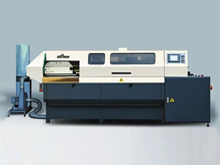
2. Paperback automatic book binding machine: A perfect binding machine, such as our sterling digibinder for sale, involves gluing the printed sheets directly to the spine of softcover books made from heavyweight card stock paper.
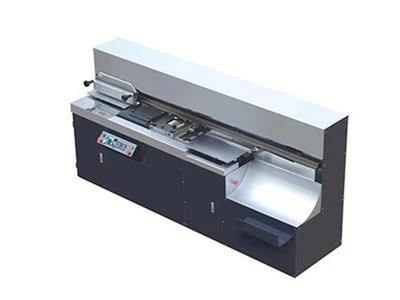
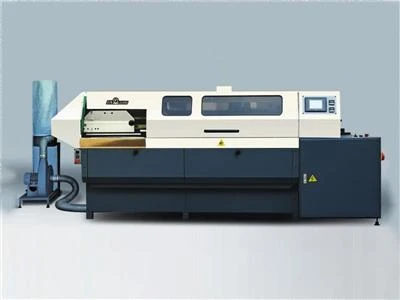
3. PUR automatic book binding machine: A reliable option for thicker books, the fully automatic book binding machine involves applying adhesive to the spine of page stacks before attaching them to the book’s perfect bound cover.
4. Saddle stitch binding machine: A popular choice for short-run books or booklets with small number of pages, pages are printed on sheets which then get folded and stapled together at the fold line with wire staples.
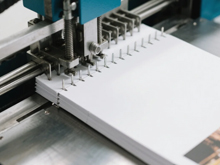
5. Spiral binding and wiro-O automatic book binding machine: The pages are single pieces with holes punched along the side of the book's spine.
For more information of automatic book printing and binding machine, you can check it out in our blog post.
Automation: Electric binding machines automate the punching and binding process with the push of a button or foot pedal. This saves time and effort, especially with large volumes of documents. Manual machines require you to physically punch holes using a handle.
Speed and Efficiency: Electric machines generally punch more pages simultaneously and work faster overall.
Ease of Use: Electric models are often user-friendly, even for those with little experience, and some include features like margin adjustments and paper alignment guides. They can also be easier to use for longer periods, as the operator doesn't have to physically punch the holes.
Portability: Manual machines are typically more compact and lightweight, making them easier to transport.
Cost: Manual binding machines are often more affordable than their electric counterparts.
Power: Manual machines don't require electricity, offering versatility in locations where they can be used.
Noise: Manual machines operate more quietly.
Control: Some users prefer manual machines for the element of control they provide.
Quality: Electric machines may produce a better quality finished product with fewer missed punches.
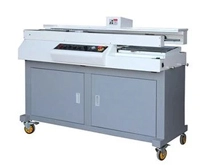
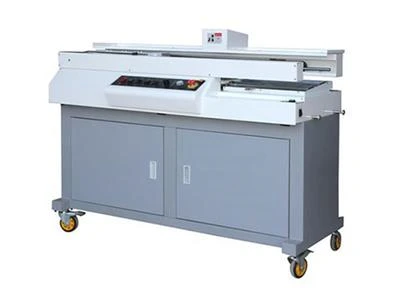
Choosing between electric and manual binding machines depends on your needs. Electric machines, like the EX-860E Automatic Book Binder (250-300 books/hour) and JBT50-4D Elliptic Perfect Binding Machine (1700 books/hour), offer high efficiency, ideal for large-scale production. They feature automated table clamping with eye detection and side glue for precision, reducing manual effort and ensuring consistent quality. With power ratings like 1.8Kw for EX-860E and 15Kw for JBT50-4D, they handle thicker books (up to 60mm) and various cover thicknesses (70P-250P). Manual machines, such as the EX-860E in manual mode (200-280 books/hour), are better for smaller batches, offering flexibility and cost-effectiveness for low-volume tasks. Electric machines save time but require higher investment, while manual options suit budget-conscious users with lighter workloads. EX.EXPORT’s range caters to both, ensuring quality and durability.
1. Professional Documents
Reports and Presentations: Create polished, professional-looking reports and presentations that are easy to flip through.
Proposals and Business Documents: Bind business proposals, project reports, and business plans for clients and stakeholders.
Manuals and Training Materials: Produce instruction manuals, employee handbooks, and training guides.
Catalogs and Brochures: Create marketing brochures, product catalogs, and promotional materials.
Reference Manuals: Useful for technical guides and product manuals, allowing the document to lay flat for easy reference.
Legal and Financial Documents: Organize legal briefs and financial reports.
Business Portfolios and Resumes: Create a professional portfolio to display your work.
2. Educational Materials
Lesson Plans and Study Guides: Teachers can create bound educational materials.
School Projects: Students can use binding machines for projects and reports.
Yearbooks: Create student-produced yearbooks.
3. Personal and Creative Projects
Photo Albums and Scrapbooks: Design customized photo albums and scrapbooks.
Cookbooks and Recipe Books: Create your own cookbooks that can lay flat while cooking.
Journals and Notebooks: Make personalized journals and notebooks.
Coloring Books: Produce custom coloring books.
Storybooks: Turn favorite stories into shareable books.
Art Portfolios and Sketchbooks: Keep creative works organized.
Memory Books: Compile cherished memories into a bound keepsake.
Travel Books and Vacation Scrapbooks: Document your travel adventures.
Family History Books: Preserve your family's history in a special book.
advantages of automatic envelope making machine